How to Draw a Panda Step by Step
Welcome to this panda drawing lesson! Let's break it down into simple steps, and have fun along the way. Each card below shows exactly what your page should look like at that step. New lines are dark, earlier lines fade back, guides are orange.
We'll start with basic shapes like circles and ovals to form the panda's head and body. Using light pencil strokes, we'll gradually refine our drawing with contour lines and details.
✎ lesson by Lino Ti · construction method, checked step by step · updated July 2026
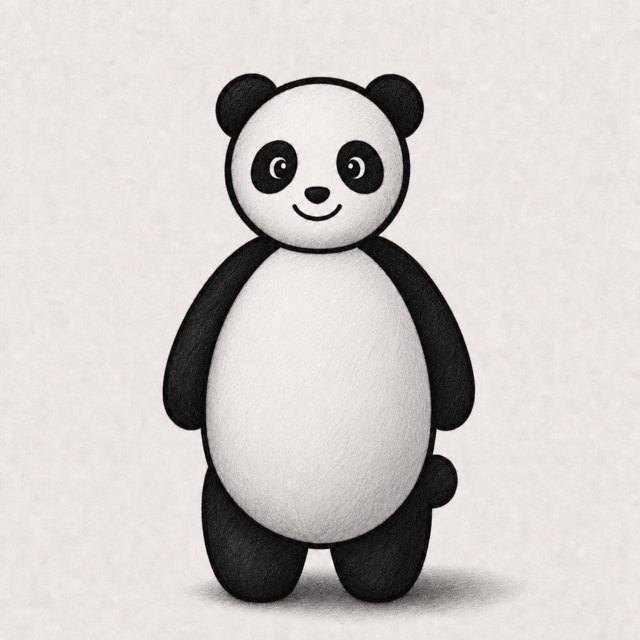
the finished panda ✎
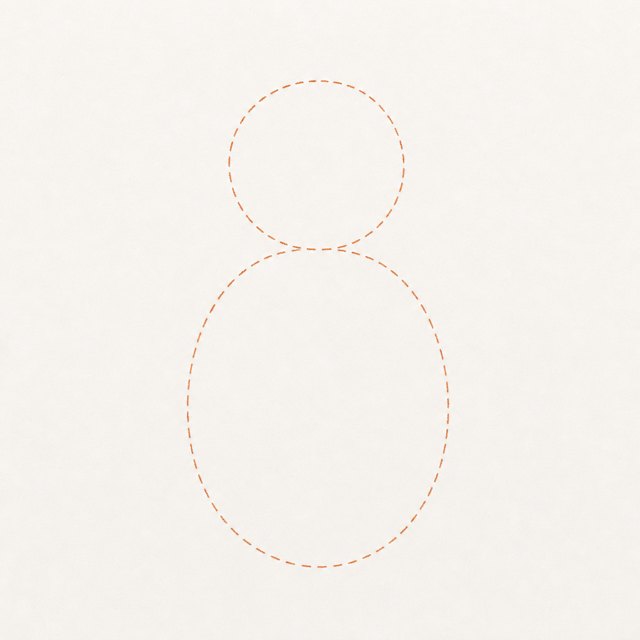
Basic Shapes
Sketch a large oval for the body and a smaller circle above for the head.
Begin by drawing a large oval shape for the panda's body. Above it, add a smaller circle for the head. Use light pencil strokes to make adjustments easier later. These simple shapes will help us establish the panda's overall form.
check: Make sure the head circle sits nicely on top of the body oval before moving on ✎
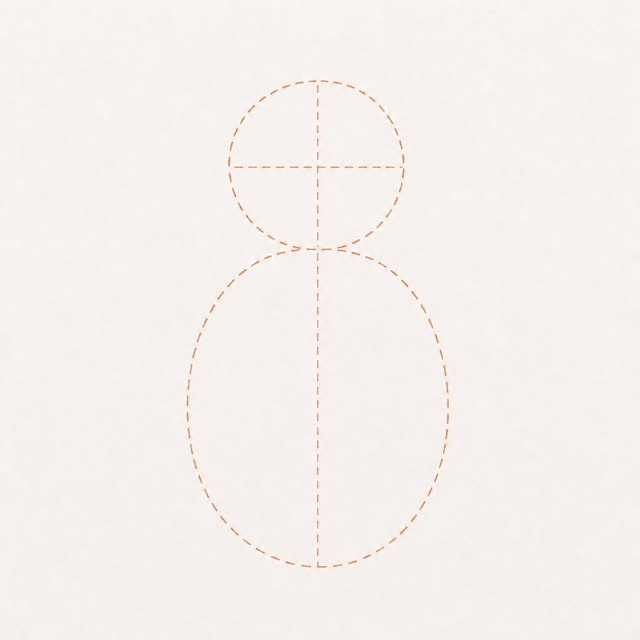
Guidelines
Draw a vertical line through the head and a horizontal line across it.
Now, let's add some guidelines. Draw a vertical line down the center of the head circle and a horizontal line across it. These lines will help us place the panda's facial features symmetrically. Keep your pencil light, as these lines are just guides.
check: your lines divide the head circle evenly before continuing ✎
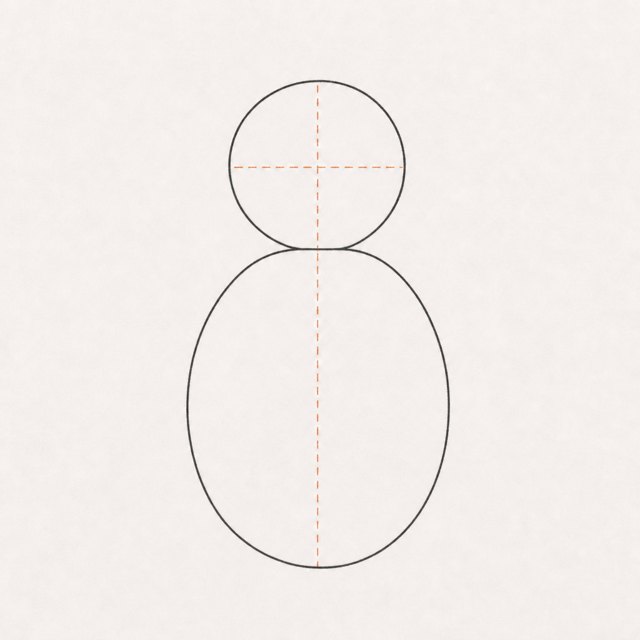
Outline Shape
Refine the outline of the panda's head and body, adding gentle curves.
Gently refine the outline of the panda's head and body by adding curves to shape its round face and chubby body. Use the initial shapes as a guide, and let your pencil flow smoothly. This step begins to bring the panda's form to life.
check: Ensure the curves are smooth and natural, adjusting as needed for a cute panda shape ✎
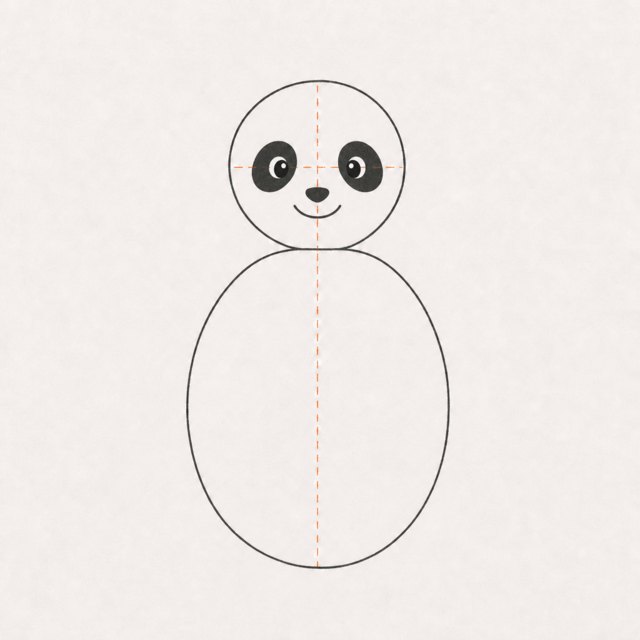
Facial Features
Place the eyes, nose, and mouth using the guidelines.
Using the guidelines, draw two large circles for the panda's eyes on either side of the vertical line. Add a small oval for the nose where the lines intersect, and sketch a small curve for the mouth below the nose. These features bring character to your panda.
check: the eyes are even and the nose is centered before proceeding ✎
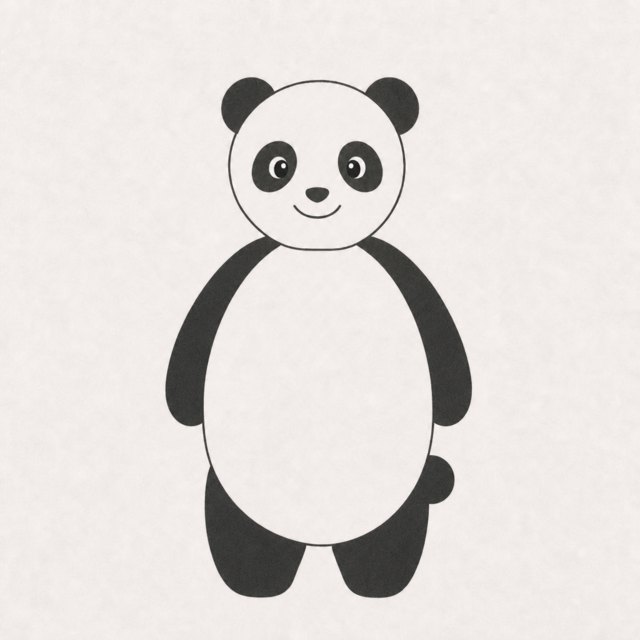
Limbs and Ears
Draw the panda's ears, arms, legs, and tail using simple shapes.
Add two semicircles on top of the head for ears. For the arms and legs, use curved lines extending from the body, and a short line for the tail. These elements complete the panda's body, giving it a playful appearance.
check: Ensure the limbs are proportionate to the body and have a soft, rounded look ✎
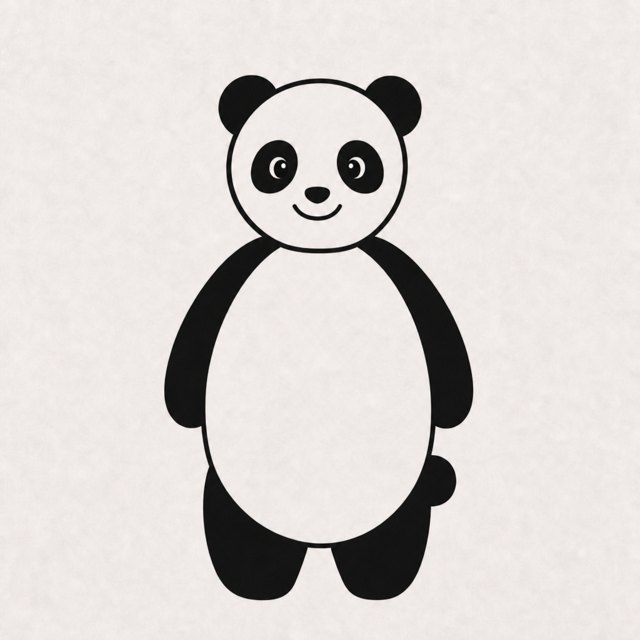
Final Details
Darken the lines and add line weight for emphasis.
Now, press a bit harder to darken the lines, adding weight for emphasis. Focus on the panda's outline, facial features, and limbs. This step defines your drawing, making it stand out with confidence and clarity.
check: your lines are smooth and expressive, capturing the panda's charm ✎
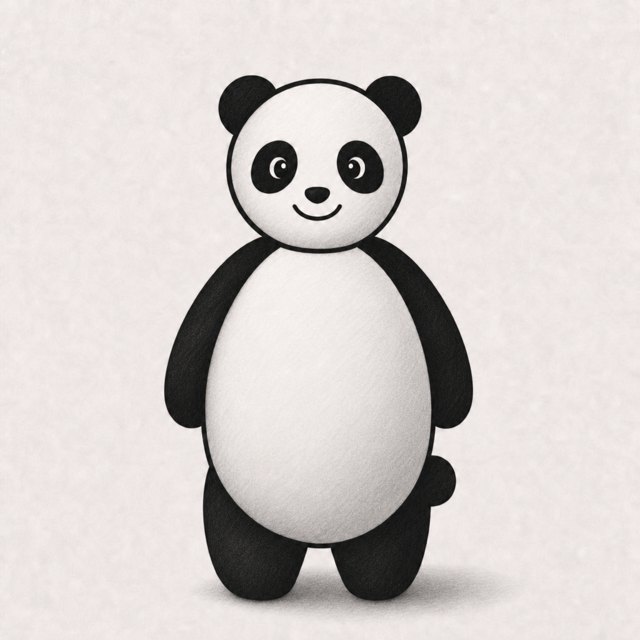
Add Tone and Shade
Pick where the light comes from, then shade the opposite side with light strokes.
Time to learn tone. Artists call the grays between white and black values, and even three are enough: light, medium and dark. Decide where your light comes from, and imagine it shining from the top left. Now shade the opposite side with the side of your pencil, in soft even layers. Shading is what makes your drawing feel round instead of flat.
check: the shading sits on the side away from the light ✎
Finishing Touches
Darken the boldest edges, fill the darkest details, and add a few texture strokes.
The last minute is where the magic happens. Press harder on the outer contour so it stands out, and keep the inside lines thin and soft. Fill your darkest little details completely, add a few short strokes for texture, and give the drawing a soft shadow to sit on. Mixing thin, soft and hard lines is what gives a drawing its character.
check: your outer lines look bolder than your inner ones ✎
Want to draw YOUR panda?
Upload a photo and your teacher builds this exact kind of lesson from it. You draw it yourself, on paper, guided stroke by stroke.
Turn a photo into your lessonfirst lesson free · no card, no subscription